Healing in the Key of Hip-Hop
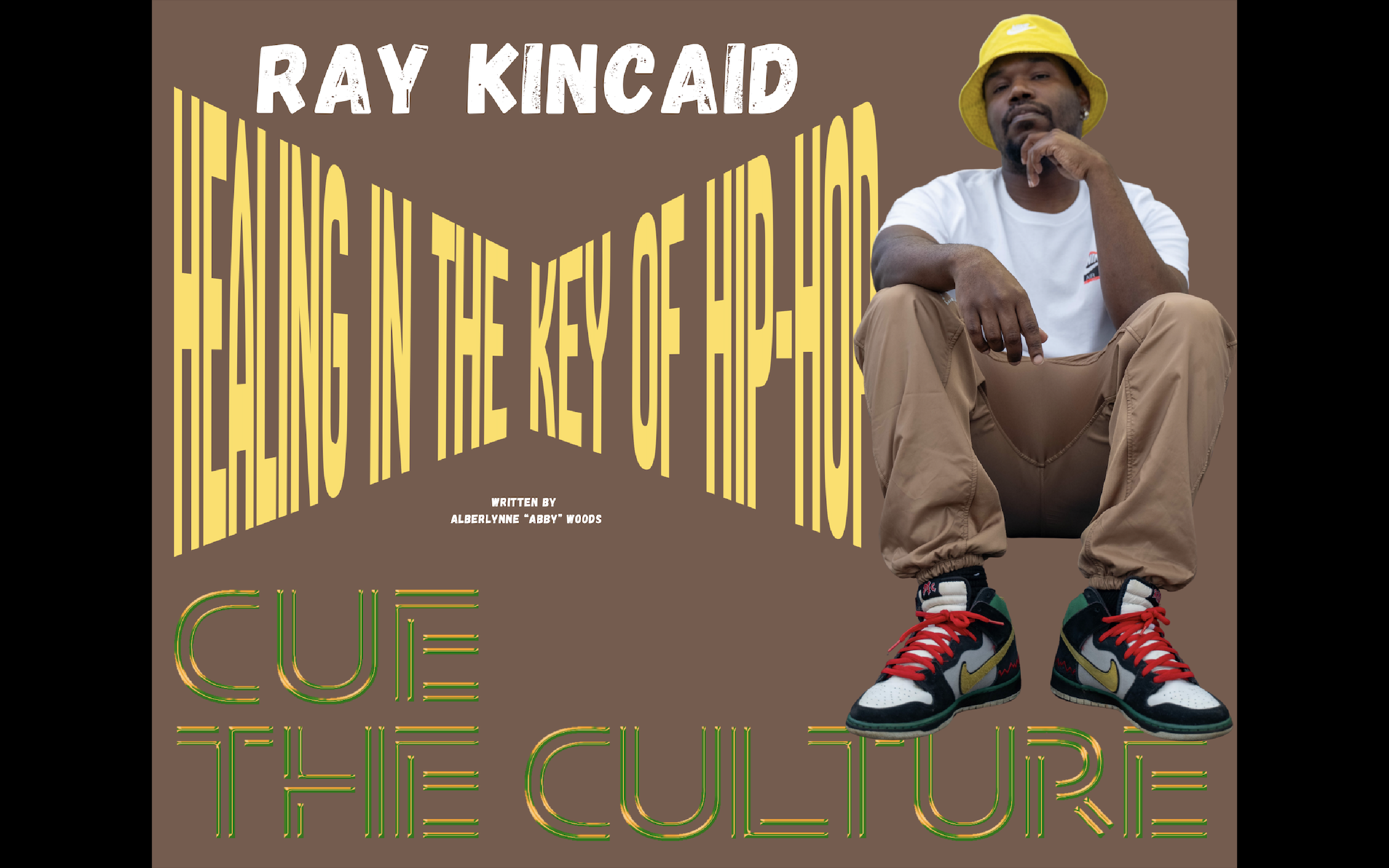
Healing in the Key of Hip-Hop
Written by Alberlynne “Abby” Woods
Ray Kincaid kept appearing on my timeline until I finally stopped scrolling and started listening.
I expected to hear another talented rapper.
Instead, I found someone talking about healing.
Like many artists, Ray’s story almost ended before it began.
There was a season when he walked away from music entirely. Life had shifted. Responsibilities had grown. Becoming a father demanded stability, and rap no longer felt like the practical choice. For nearly five years, he stopped pursuing it altogether.
Then came a phone call from a fellow friend and Jackson, Mississippi artist, Akeem Ali. He is known to many by his alter-ego Keemy Casanova
After watching his friend’s career take off, Ray was invited to spend a month in Atlanta. What he expected was encouragement. What he found was discipline. Every day looked the same: the gym, a meal, the studio, repeat. He watched songs being written, celebrities walking through the room, and opportunities created through relentless consistency. It was not luck.
“That month changed my life,” he said.
Sometimes the biggest gift another artist can give isn’t a feature or a co-sign. Sometimes it’s proof that the dream is actually possible.
Since recommitting to the plan Ray’s name has steadily traveled beyond Mississippi. Co-signs from respected voices like one of our Podcast favorites DeAnte Kyle and legendary rapper T.I. have introduced him to larger audiences, while listeners continue discovering an artist whose music refuses to fit comfortably inside the stereotypes often attached to Southern rap.
Ask him about success and he almost shrugs.
“I’m still Ray.”
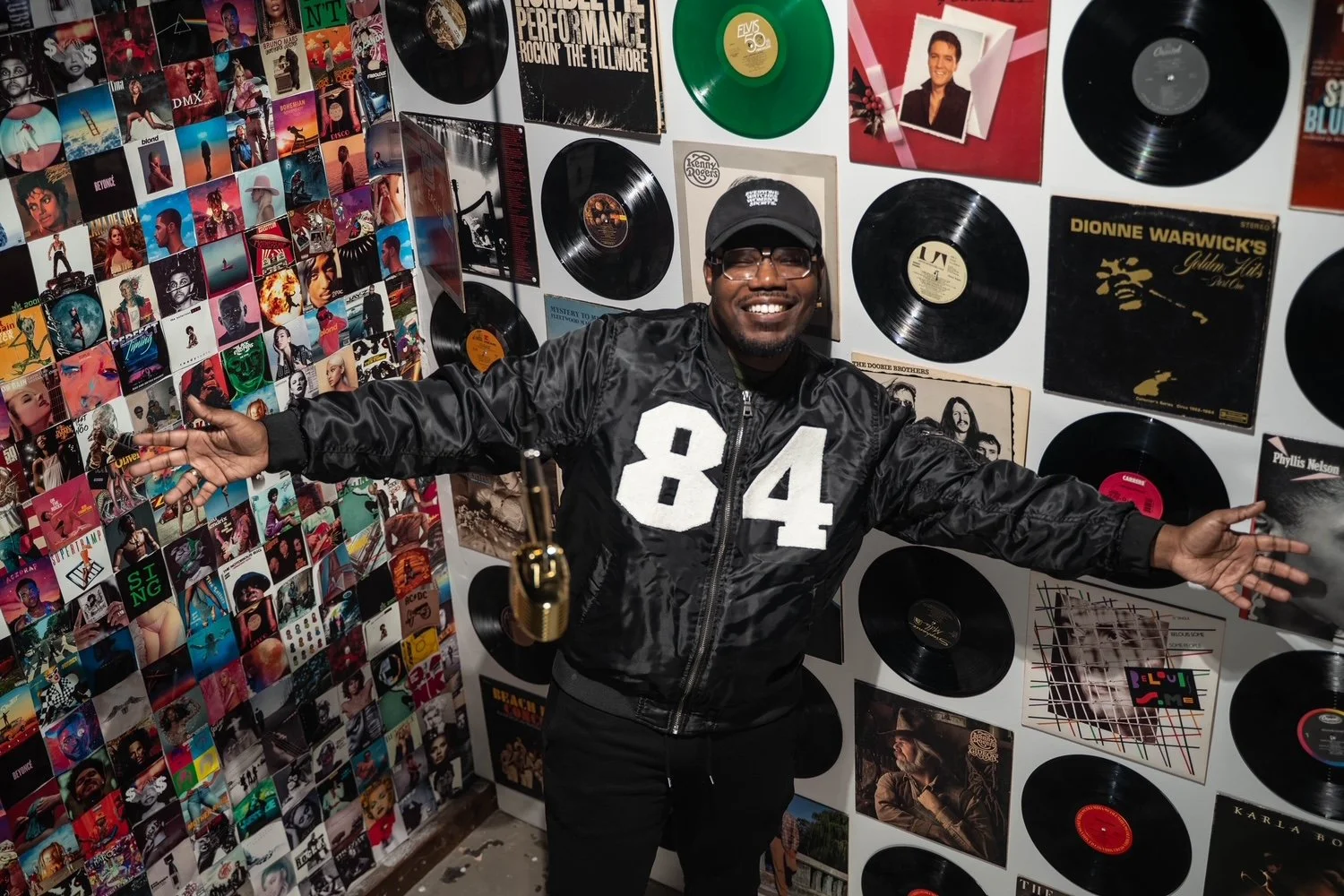
Ray standing in front of a wall that is covered in album covers
Photo Credit: The Works LLS @theWorksLLC
His humility is genuine.
Even as his audience grows, he speaks more about becoming a better father, protecting his peace, and creating meaningful art than becoming famous. He admits social media can become overwhelming, intentionally stepping away when necessary to protect his mental health. In an industry that often rewards constant visibility, Ray is choosing balance over burnout.
Ray Kincaid is profound on and off the mic. He dropped a line that made me hear a needle drag across vinyl.
Ray said, “90% of my music is about healing.”
It is an unexpected mission statement from a rapper, but after listening to him explain it, it becomes impossible to hear his music the same way again. Healing, for Ray, isn’t simply therapy or emotional recovery. It’s becoming emotionally intelligent. It’s learning from relationships. It’s growing as a father. It’s protecting Black women. It’s recognizing old patterns and choosing better ones the next time life tests you.
When asked why uplifting Black women matters so deeply to him, he doesn’t hesitate.
His daughter changed everything.
That perspective echoes throughout his work. Even songs that might initially sound confrontational, he explains, make sense when heard within the larger body of work. Like scenes inside a film, every record serves a greater purpose.
It’s a refreshing level of intentionality in a genre often criticized for rewarding immediacy, hustling, and sex over reflection.
When sharing about Mississippi, Ray explained, “We don’t have the resources. So we take what we have, and we try to make the best of it.”
Ray’s words resonated because they’re part of my story too. Cue The Culture didn’t begin in New York or my birthplace of Los Angeles. It began in Carthage, Mississippi. I know first hand how when you’re building from Mississippi, you quickly learn that recognition isn’t guaranteed. You keep creating anyway. You trust the work and over time, that persistence becomes part of the art itself.
Ray then delivered what may become one of the defining observations ever made about the state.

Ray sitting crossed legged on some steps
Photo Credit: The Works LLS @theWorksLLC
He said, “If you wipe the makeup off America’s face, it looks like Mississippi.”
He’s right. Mississippi contains both America’s deepest wounds and some of its greatest gifts. It is the birthplace of American music. It carries extraordinary history while simultaneously confronting difficult truths. It is beautiful and broken, often in the very same place. According to Ray, that’s exactly why Mississippi matters. It reveals America exactly as she is; without makeup.
That philosophy may also explain why his music feels different.
Rather than running from Mississippi, he draws strength from it.
Rather than chasing another city’s identity, he is helping redefine what Mississippi hip-hop can become.
His artistic influences tell the same story.
Michael Jackson. Anita Baker. Marvin Gaye. Stevie Wonder. Tupac. Kendrick Lamar. DMX.
It’s a playlist built on storytelling as much as performance, emotion as much as entertainment.
As our conversation concluded, I asked Ray what he would tell his seven-year-old self. I wanted to know what advise he would give to the little boy who first fell in love with music after watching Michael Jackson perform.
His answer was beautifully simple.
“Keep being yourself and most importantly… you are good enough.”
Maybe that’s the blueprint.
Not just for Ray Kincaid.
For Mississippi artists.
For hip-hop.
For all of us.
Healing doesn’t erase where you’ve been. It changes how you move forward.
Ray Kincaid is simply reminding us what it sounds like when the music and the south has got something to say.