
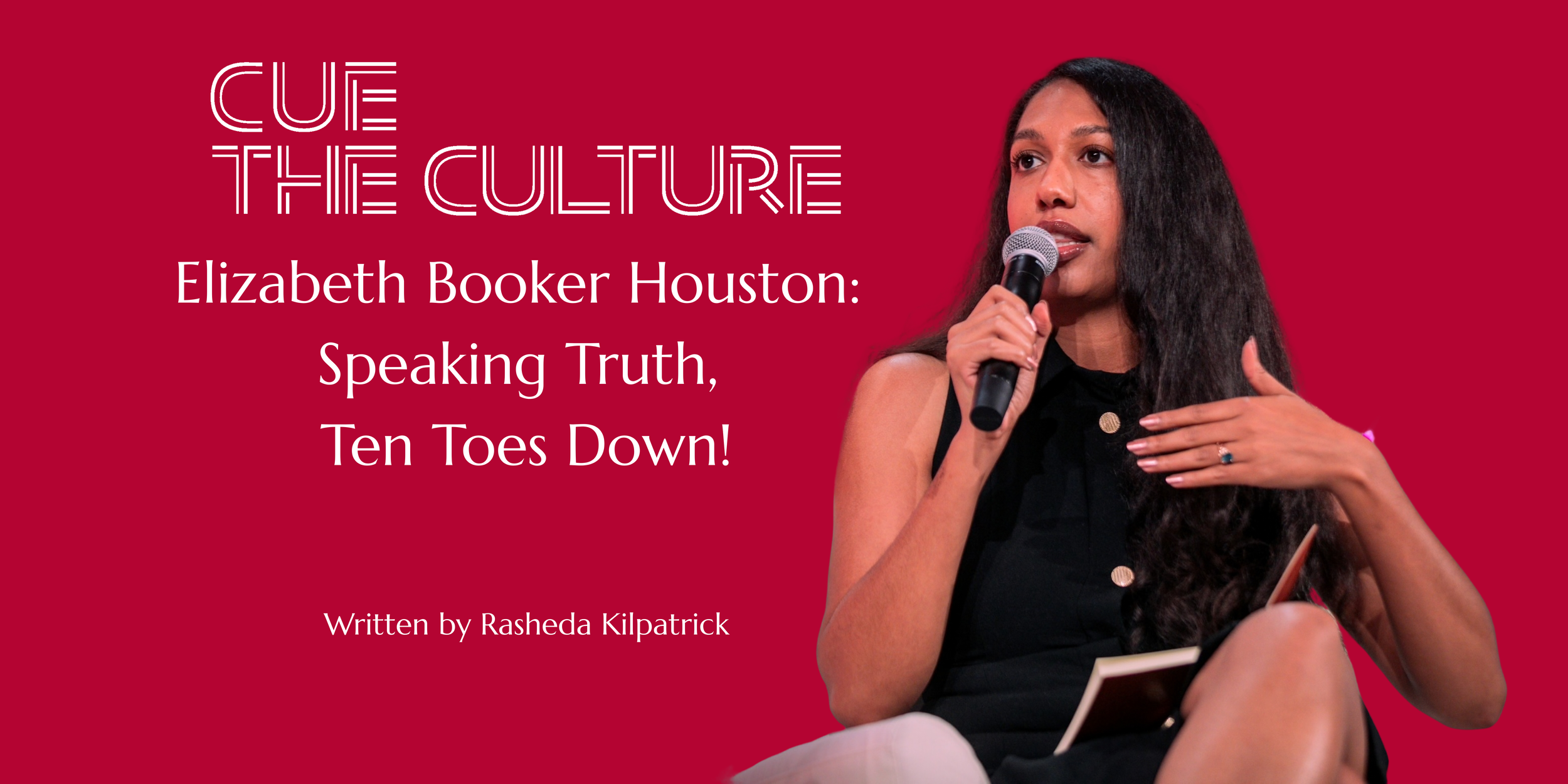
Elizabeth Booker Houston: Speaking Truth, Ten Toes Down!
Written by Rasheda Kilpatrick
Elizabeth Booker Houston, known in these social media streets as @Bookersquared, moves through the crowded world of online political commentary with a voice that is unmistakably her own. She is sharp, analytical, laced with humor and rooted in a fierce commitment to truth. In a digital landscape where hot takes often outrun facts, she has built a following by doing the opposite: slowing down long enough to explain policy, challenge misinformation and, when necessary, confront the trolls who mistake harassment for debate.
As someone who has spent years working at the intersection of law, activism and storytelling, I recognize the discipline behind that kind of public voice. Advocacy in the digital age requires more than opinions. It requires clarity, courage and a willingness to stand ten toes down when the noise of the internet turns hostile. Houston does exactly that.
Many people first encounter her through social media where her commentary blends serious political analysis with biting satire. Scroll long enough and you will likely see her dismantling a misleading narrative, correcting a viral claim or addressing the kind of online bullying that often targets outspoken Black women.
What audiences may not immediately see is how long Houston has been preparing for this role.
She grew up in Memphis, Tennessee, a city whose history is inseparable from the civil rights movement. Her political awareness began early, shaped not by textbooks but by lived experience. Houston has lived with chronic illnesses since the age of two, which meant that hospitals, insurance systems and public health programs were part of her daily life long before she understood the language of policy.
By nine years old, she was already questioning how healthcare systems worked. After watching the film John Q., a story about a father driven to desperate measures when his son is denied a life-saving transplant because of insurance barriers, she remembers feeling stunned by the idea that a child could be denied care.
Her response was immediate and direct: everyone should have healthcare.
That instinct, to look at systems and ask who they are failing, never left her. As a teenager she was already writing about anti-racism and public policy, eventually winning an essay contest at the National Civil Rights Museum, the historic site where Dr. Martin Luther King Jr. was assassinated.
Houston often describes herself as an “intense child,” a description offered affectionately by her mother. Her upbringing was shaped by two powerful influences: a Black father who made sure she understood African American history, and a white mother with French heritage who encouraged spirited political conversation at home.
Her father’s lessons were not abstract. On Sundays he would take her around Memphis, pointing out places where key moments of the civil rights movement had unfolded. Those stories rooted her in a deeper understanding of the country she lived in.
They also prepared her for the complicated realities of growing up biracial in suburban Tennessee. When her family moved to a predominantly white area outside Memphis, Houston faced racism directly. In the tense years following 9/11, classmates hurled slurs at her and called her a terrorist.
Experiences like that did not quiet her voice. They sharpened it.
Years later, tragedy reshaped her life again. In 2017, Houston’s brother was murdered. The case remains unsolved.
Grief pushed her toward writing. She started a blog as a place to process the loss and examine the systems surrounding violence and justice. At first the blog wandered across topics, including a brief experiment with fashion content, but politics inevitably resurfaced.
Then the pandemic arrived.
While on maternity leave with a newborn, Houston began posting short videos online explaining public health policy, including emergency vaccine authorizations and pandemic response decisions. As a public health law expert, she saw an opportunity to counter the wave of misinformation circulating online.
People paid attention
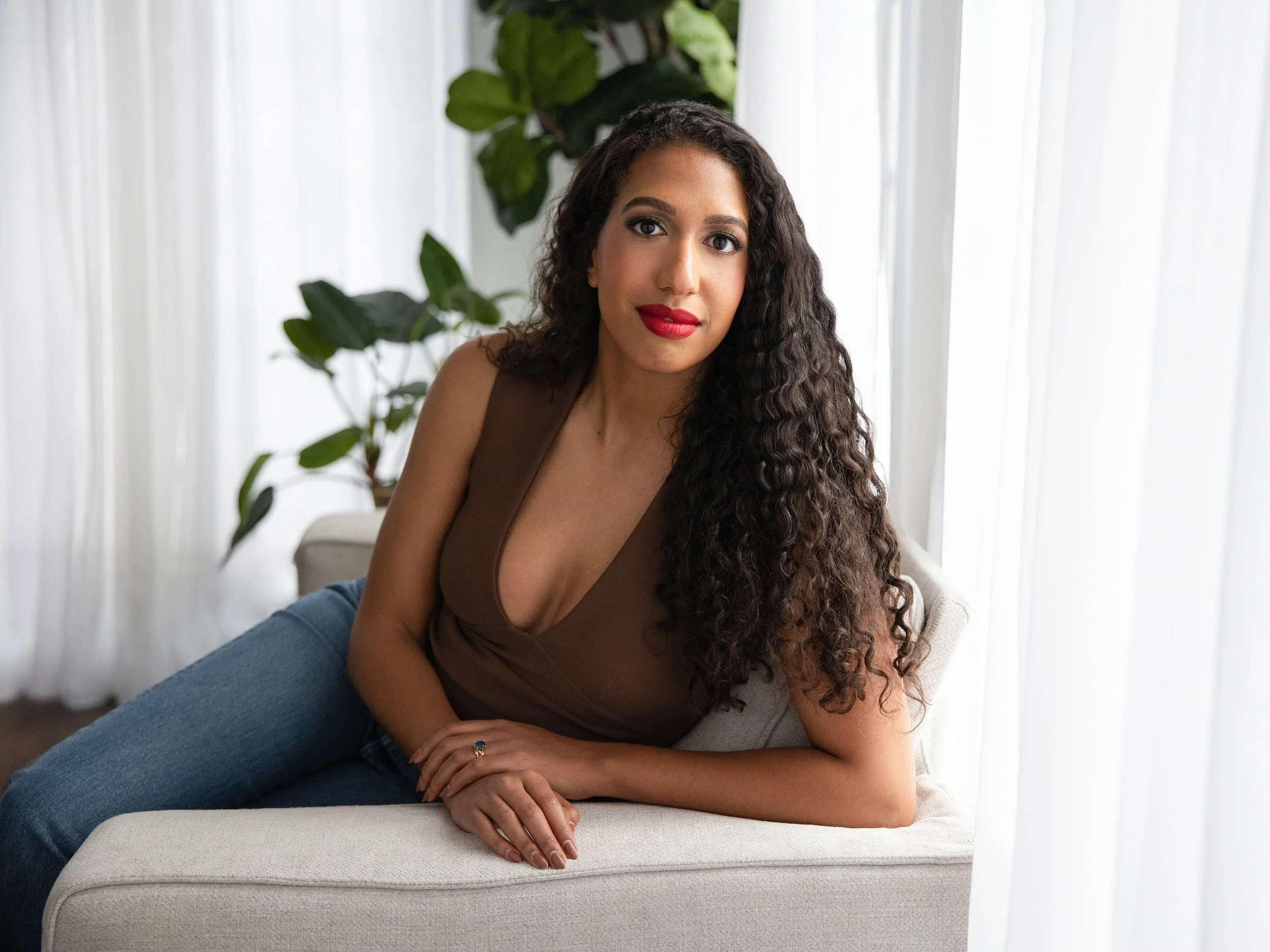
Photo Credit: Lakesha Miner
@Lakeshaminerphotography
Her videos began traveling quickly across platforms. Some were straightforward policy breakdowns. Others leaned into humor and cultural commentary. One satirical video about rapper Lil Nas X caught the artist’s attention and eventually landed her content on national entertainment television.
What audiences quickly discovered was that Houston’s ability to translate complicated issues was matched by a comedian’s instinct for timing.
That instinct is not accidental. She is also a stand-up comic.
In 2021, after vaccines rolled out, Houston decided to try performing comedy, something she had long dreamed of doing. Her first set landed so well that she kept going. Before long she found herself opening for legendary comedian D.L. Hughley, a star of the iconic Kings of Comedy tour.
For Houston, comedy and politics work best together.
Humor disarms audiences. It invites people into conversations they might otherwise avoid.
But the attention that comes with speaking openly about politics—particularly as a Black woman—also carries a cost.
Houston frequently faces waves of criticism and harassment online. Some of it comes from ideological opponents. Some comes from corners of the internet that claim to be politically aligned but still attempt to dictate what she should talk about.
She is clear about where her priorities lie.
Her platform centers Black women.
When critics demand commentary on issues outside that focus, she refuses to be pressured. The blunt clarity of her response has become part of her public persona.
One of the ways she pushes back against harassment is by publicly confronting trolls who show up in her comment sections. The videos often go viral, but she insists the purpose is not spectacle.
It is strategy.
By responding directly and forcefully, she hopes to discourage people who believe targeting Black women online carries no consequences.
Until recently Houston balanced her growing digital presence with a career as a government lawyer. Managing both eventually became impossible. The demands of legal work, content creation, interviews, public appearances and comedy performances began to overlap in ways that stretched her schedule beyond its limits.
Eventually she made the decision to step fully into her platform.
Today she works full time as a political commentator, educator and creator. Even with a growing national audience, she still runs most of the operation herself. Her loving and supportive husband helps manage the finances.
Everything else is Houston.
Her influence continues to expand. She has been nominated for an NAACP Award and was tapped by Congresswoman Jasmine Crockett to lead social media campaign efforts—recognition that underscores how seriously her political voice is being taken beyond the internet.
Yet the affirmation she speaks about most often comes from somewhere else entirely.
Black women.
At events, after comedy shows and sometimes in everyday moments, women approach her simply to say they are praying for her.
For someone who spends so much time navigating the sharp edges of online discourse, those encounters carry weight.
The internet can be relentless. The work of speaking truth publicly often is.
But Elizabeth Booker Houston keeps showing up anyway. And in a moment when too many voices are pressured into silence, that kind of resolve matters.