

Beyond the Box Score: Relationship-Driven Sports Fandom in the Social Media Era
Written by Brishana Collins
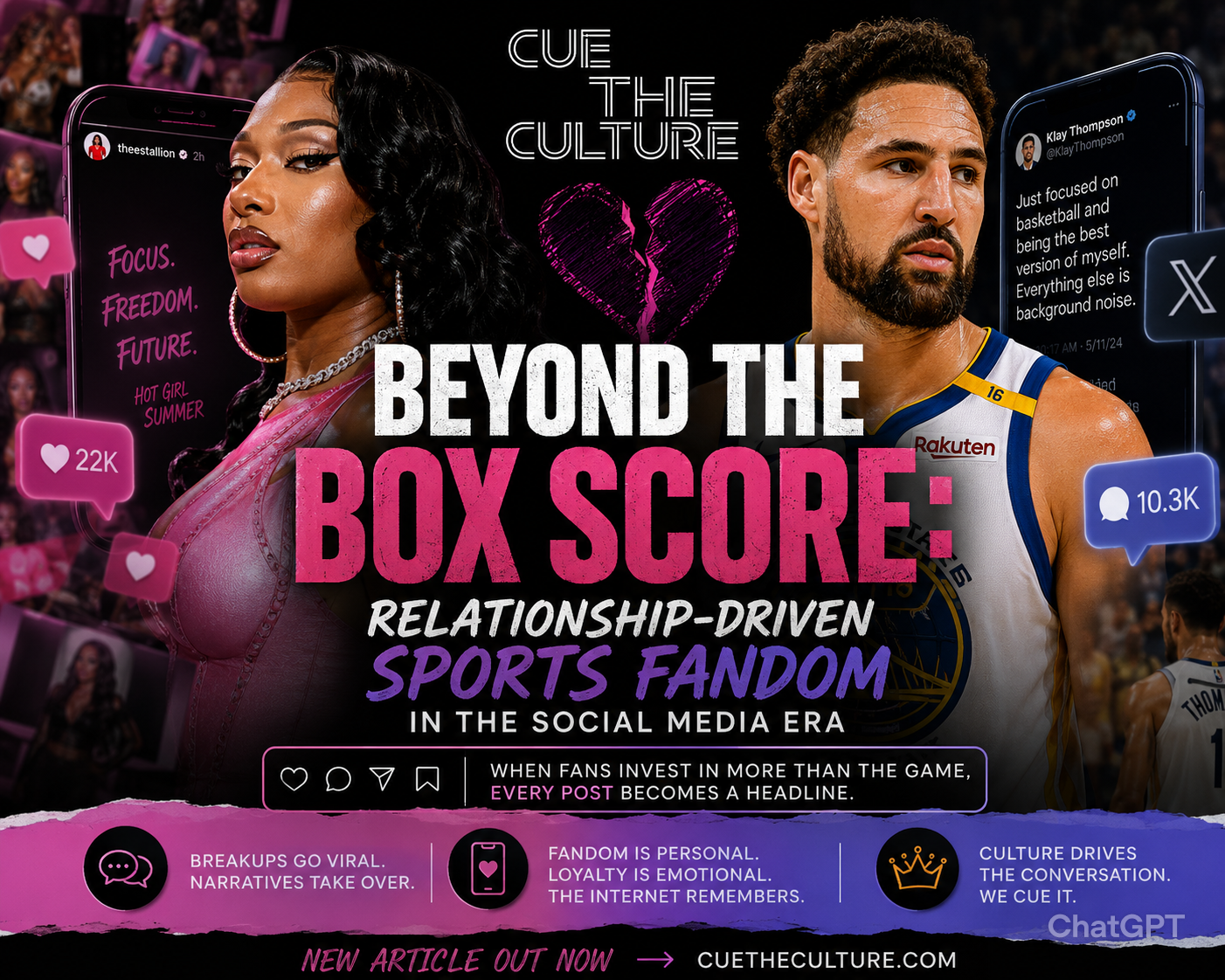
When rumors of Megan Thee Stallion and Klay Thompson breaking up began circulating online, my timeline reacted almost instantly. Some people joked about Klay “fumbling” Megan. Others defended him before details had even fully emerged. Within hours, fans were reposting screenshots, debating loyalty, and choosing sides in a relationship involving two people they had never met.
What caught my attention wasn’t necessarily the breakup itself—celebrity relationships becoming public spectacle isn’t anything new. It was how many people participating in the conversation didn’t regularly talk about basketball at all.
People who had never posted about the NBA suddenly had opinions on Klay Thompson. Fans who likely couldn’t explain the Mavericks’ rotation were discussing his career, personality, and relationship history like they had been following him for years. Somewhere along the way, sports fandom stopped being limited to the games themselves. Relationships, social media, and celebrity culture had become part of the experience too.
The clearest example of this came during what many people dubbed the “Taylor Swift Effect.” Once Taylor Swift began attending Kansas City Chiefs games alongside Travis Kelce, the NFL reached audiences that probably never planned on watching football in the first place. Broadcasts regularly cut to Swift during games, her reactions becoming part of the viewing experience itself. On social media, clips of her celebrating touchdowns traveled just as quickly as the highlights did. Suddenly, people who entered the season caring more about the Eras Tour than the AFC standings were learning playoff scenarios and tight end statistics.
At the time, much of the conversation focused on ratings and viewership spikes. But the more interesting shift was happening in the audience itself and the way people were engaging with sports entirely.
For a growing number of younger fans, sports are no longer experienced separately from internet culture. Highlights appear between memes and celebrity gossip on the same feeds—athletes functioning as both competitors and public personalities at the same time. Games unfold alongside reactions, edits, rumors, and relationship discourse happening in real time online. A courtside appearance can circulate just as quickly as a game-winning shot.
That shift has created a new kind of sports fan, one whose emotional entry point into a league may have little to do with the sport itself.
Someone may begin following the NBA because Megan Thee Stallion is sitting courtside, but over time they start recognizing team narratives, learning player personalities, and understanding league dynamics. What starts as interest in a celebrity relationship slowly turns into familiarity with the sport surrounding it. Relationships become gateways into fandom. The same thing is beginning to happen with newer pairings online, like fans reacting to rumors and interactions surrounding GloRilla and Brandon Ingram. Even before anything was fully confirmed, audiences were already emotionally engaging with the possibility of the relationship itself—proof of how quickly sports and celebrity culture now overlap online.
Social media accelerates all of this. Platforms like TikTok, Instagram, and X turn celebrity-athlete relationships into ongoing public storylines that audiences follow collectively. Every post, appearance, or interaction becomes part of a larger narrative people feel invested in. Fans aren’t just watching games anymore—they’re following story arcs.
That emotional investment also explains why breakups now create reactions that resemble stan culture more than traditional sports discourse. Following the reported split between Megan and Klay, social media quickly divided itself into sides. Some blamed Klay for allegedly cheating. Others criticized Megan. Memes spread faster than actual reporting, and complete strangers defended people they had never met with the intensity usually reserved for favorite teams or artists.
In many ways, fans weren’t just reacting to a breakup—they were reacting to the collapse of a narrative they had emotionally attached themselves to.
That’s part of what makes modern sports fandom feel so different from previous generations. Fandom used to be tied heavily to geography. People rooted for teams because of where they grew up, where their families lived, or which schools they attended. Now, algorithms play almost as large a role as location. Viral moments, celebrity relationships, and online discourse introduce audiences to sports every day—often through entertainment rather than competition.
The NBA has adapted especially well to this environment. The league already thrives on personality-driven marketing. Pregame tunnel fits, podcasts, social media posts, and off-court visibility all exist as extensions of the product itself. Relationships fit naturally into that ecosystem because they keep athletes culturally relevant even outside the game.
None of this means the actual sports no longer matter. Performance still drives careers, championships, and legacies. But in an era where attention is one of the most valuable commodities in entertainment, leagues understand that cultural visibility matters too.
And increasingly, relationships are part of that visibility.
The modern sports fan may arrive because of a highlight, but they may stay because they became invested in the people surrounding it. In today’s social media era, the box score is no longer the only thing bringing audiences to the game. And maybe that’s why people reacted so strongly to Megan and Klay in the first place—not simply because they were famous, but because audiences had grown attached to the story they represented. Even after the breakup discourse, jokes, and endless online commentary, there’s still something strangely hopeful about watching two people navigate love and visibility in public. Fans may turn relationships into content, but underneath all the memes and debates is a very human desire to see people find connection, happiness, and growth. Whether it’s Megan and Klay, GloRilla and Brandon Ingram, or the next pairing the internet decides to collectively follow, audiences continue rooting for more than just wins and championships. Sometimes, they’re rooting for people to find love, learn from heartbreak, and discover themselves along the way.